
|
Getting your Trinity Audio player ready...
|
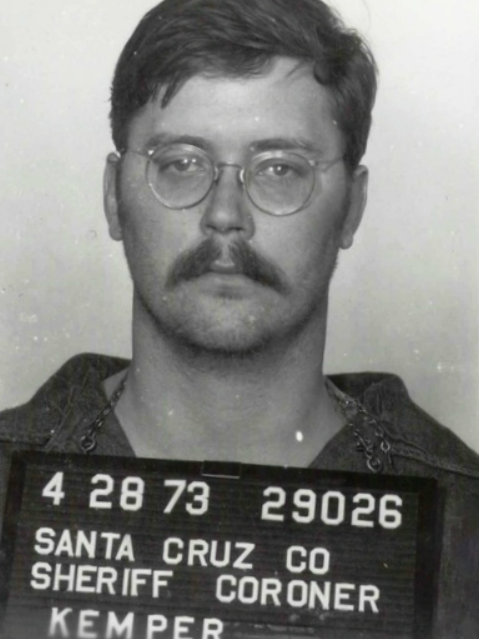
This report provides a formal analysis of the criminal profile, behavioral patterns, and psychological characteristics of Edmund Emil Kemper III, famously known as the “Co-ed Killer.”
Offender Overview
- Name: Edmund Emil Kemper III
- Aliases: The Co-ed Killer, The Big Ed, The Ogre of Aptos.
- Physical Description: Standing 6’9″ and weighing approximately 300 lbs during his active years, Kemper’s size was a significant factor in his ability to overpower victims.
- IQ: Measured at approximately 145 (near-genius level).
- Status: Incarcerated at the California Medical Facility (CMF) in Vacaville, serving eight concurrent life sentences.
Criminal History and Timeline
Kemper’s criminal career is divided into two distinct phases: his adolescent homicides and his adult serial killing spree.
| Phase | Date | Victim(s) | Method/Notes |
| Adolescent | Aug 1964 | Paternal Grandparents | Shot grandmother to “see what it felt like”; killed grandfather to spare him the shock. |
| Institutionalization | 1964–1969 | N/A | Spent 5 years at Atascadero State Hospital; convinced psychiatrists of his rehabilitation. |
| Active Spree | May 1972 | Mary Ann Pesce & Anita Luchessa | Picked up hitchhikers; stabbed and strangled them. |
| Sept 1972 | Aiko Koo | 15-year-old student; strangled and dismembered. | |
| Jan 1973 | Cindy Schall | Shot and dismembered; buried her head in his mother’s garden. | |
| Feb 1973 | Rosalind Thorpe & Alice Liu | Shot while in his vehicle; decapitated post-mortem. | |
| Final Homicides | April 1973 | Clarnell Kemper (Mother) | Bludgeoned and decapitated her. |
| April 1973 | Sally Hallett | Strangled his mother’s friend to facilitate his escape. |
Modus Operandi (MO) and Signature
Modus Operandi
Kemper’s MO was highly organized and evolved as he gained experience:
- Luring: He targeted young female college students (co-eds) hitchhiking in the Santa Cruz area. He used his calm demeanor and a UC Santa Cruz parking sticker (obtained through his mother) to build rapport and lower their guard.
- Vehicle Preparation: He modified his vehicle to resemble an unmarked police car and used a radio transmitter to monitor police frequencies.
- Execution: Most victims were taken to secluded areas where he used his physical stature to restrain them. He typically killed via stabbing, shooting, or strangulation.
Signature
Unlike the MO (which is what the killer does to commit the crime), the signature reflects the killer’s psychological needs:
- Post-Mortem Rituals: Kemper engaged in extensive necrophilia, decapitation, and dismemberment.
- Trophy Keeping: He often kept body parts (specifically heads) for several days, engaging in conversations with them before disposal.
- Symbolic Violence: The murder of his mother involved a highly symbolic signature—removing her larynx and placing it in a garbage disposal to “silence” her.
Psychological Profile
- Primary Diagnoses: Historically diagnosed with paranoid schizophrenia (at age 15) and later Antisocial Personality Disorder (ASPD).
- The Mother Influence: Profilers and Kemper himself noted that his victims were surrogates for his mother. His rage stemmed from years of emotional abuse and being belittled by her.
- Intelligence and Manipulation: Kemper’s high IQ allowed him to manipulate psychiatric tests during his first incarceration. He later provided the FBI (including agents John Douglas and Robert Ressler) with deep insights into the serial killer mindset, helping to establish modern criminal profiling.
Conclusion
Kemper is a rare example of an “organized” serial killer who was fully aware of his pathology. He eventually turned himself in to the police in 1973, stating that the “urge” had ended once he had killed his mother.
Would you like me to find more details on how Kemper’s interviews helped the FBI develop their early criminal profiling techniques?
The Co-ed Killer: Ed Kemper REAL Crime Scene Locations
This video provides a visual walkthrough of the specific locations in Santa Cruz where Kemper committed his crimes and disposed of remains, offering geographical context to his 11-month spree.

