
|
Getting your Trinity Audio player ready...
|
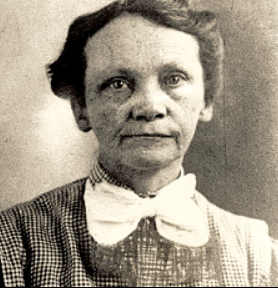
This case study analyzes the spatial and forensic patterns of Amy Archer-Gilligan, a nursing home proprietor in Connecticut whose business model relied on a lethal “lifetime care” scheme. Her case served as the primary inspiration for the play and film Arsenic and Old Lace.
The “Murder Factory”: A Geographic and Forensic Profile
Between 1907 and 1917, the Archer Home for the Elderly and Infirm in Windsor, Connecticut, saw an alarming mortality rate. While Archer-Gilligan presented herself as a compassionate “Sister,” investigation revealed that her income was tied to “lifetime care” contracts—one-time fees paid by boarders who often died shortly after signing.
Critical Geographic Data Points
The primary site of Archer-Gilligan’s crimes was her residence and business in Windsor. Below are the verified locations and their respective coordinates as documented in historical and geographical records.
| Location Type | Description | Latitude | Longitude |
| Birthplace | Milton, Connecticut (Litchfield County) | 41.7700 | -73.2700 |
| Primary Crime Scene | 37 Prospect Street, Windsor, CT (Archer Home) | 41.8631 | -72.6795 |
| Early Business Site | Newington, CT (John Seymour House) | 41.6979 | -72.7234 |
| Final Confinement | Connecticut Hospital for the Insane, Middletown | 41.5458 | -72.6322 |
Forensic Analysis: The Arsenic Purchases
Suspicion arose due to the statistical anomaly of deaths at the Archer Home. Between 1911 and 1916 alone, 48 residents died—a rate significantly higher than comparable institutions.
Local investigation centered on the Broad Street Green area in Windsor, specifically at W.H.H. Mason’s drugstore. Registry logs revealed that Archer-Gilligan purchased large quantities of arsenic, citing “rat problems” and “bedbugs.”
The Victims of the “Sister”
While the total number of deaths reached as many as 60, investigators successfully exhumed five bodies to confirm the presence of poison.
- James Archer (1910): First husband; died after a life insurance policy was taken out.
- Michael Gilligan (1914): Second husband; died three months after marriage after leaving his estate to her.
- Franklin R. Andrews (1914): An energetic boarder who died suddenly after gardening.
- Alice Gowdy (1914): Died shortly after signing a $1,000 “lifetime contract.”
- Maude Howard Lynch (1916): One of the final suspicious deaths before the 1916 arrest.
Legal Conclusion
In 1917, Amy Archer-Gilligan was arrested and initially sentenced to death. On appeal, she pleaded not guilty by reason of insanity and was convicted of second-degree murder for the death of Franklin Andrews. She was transferred to the state mental hospital in Middletown in 1924, where she remained until her death in 1962.
Her case directly led to the 1917 Connecticut bill requiring state licensing and annual death reporting for all “Old Folks Homes,” effectively ending the unregulated “lifetime care” loopholes she exploited.
In forensic accounting, this is known as a gain-based mortality pattern, where the timing of a death is statistically linked to the exhaustion or acquisition of a financial asset.
The Financial Correlation Ledger (1910–1916)
The following table maps the identified victims to the financial transactions that immediately preceded their deaths. While most of these crimes occurred at 37 Prospect Street, the forensic data highlights how Archer-Gilligan maximized her “profit” per bed.
| Victim | Transaction Date | Transaction Type | Amount (Approx.) | Date of Death |
| James Archer | Late 1910 | Life Insurance Policy | Unknown | Oct 1910 |
| Michael Gilligan | Feb 1914 | Forged Will/Estate | $4,000+ | Feb 20, 1914 |
| Franklin Andrews | May 1914 | Personal Loan | $500 | May 29, 1914 |
| Alice Gowdy | June 11, 1914 | Lifetime Care Contract | $1,000 | Dec 3, 1914 |
| Charles Smith | 1914 | Lifetime Care Contract | $1,000 | Late 1914 |
| Maude Lynch | 1916 | Periodic Payment | Unknown | 1916 |
Forensic Analysis: The “Lifetime Care” Trap
The “Lifetime Care” plan was Archer-Gilligan’s most effective tool. For a flat fee of $1,000 (roughly $31,000 today), a resident was guaranteed housing and care for the rest of their lives.
The Actuarial Anomaly
In a legitimate nursing facility, a “lifetime contract” creates a financial liability for the owner; the longer the resident lives, the less profitable they become. The use of arsenic in Archer-Gilligan’s ledger inverted profitability.
- Case Study: Alice Gowdy: After paying her $1,000 fee in June 1914, she became a “cost” to the home. She was dead within six months.
- Case Study: Franklin Andrews: His death occurred just days after Archer-Gilligan pressed him for additional funds, and he provided a $500 loan.
The Arsenic Calculation
Forensic investigators noted that Archer-Gilligan’s arsenic purchases coincided almost perfectly with periods of financial stress. In February 1914 alone, Mason’s Drugstore registry (41.8519, -72.6433) recorded her purchasing 10 ounces of arsenic—enough to kill over 100 people—just weeks before Michael Gilligan’s “sudden” death.
The chemical concentration found in exhumed victims was calculated by the state chemist to be
Arsenic > 3× Lethal Dose
This indicated not just poisoning but a massive “overdose” to ensure the bed was vacated quickly for the next “lifetime” boarder.
Conclusion of Financial Findings
The investigation by The Hartford Courant and state authorities proved that the Archer Home was not a care facility but a liquidation center. By 1916, the home had a death rate 700% higher than comparable institutions in Hartford. The financial ledgers were the “smoking gun” that turned a series of “natural deaths” into a consolidated murder trial.
Historical Note: The coordinates for the primary exhumations used as evidence are located at Windsor Veterans Memorial Cemetery (41.8545, -72.6565), where several of her victims were moved during the forensic audit of 1916.

