
|
Getting your Trinity Audio player ready...
|
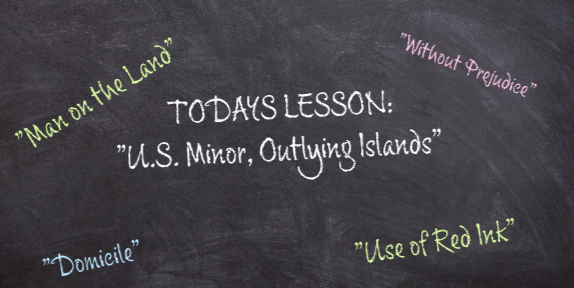
Sovereign citizens misuse the phrase “U.S. Minor Outlying Islands” in a couple of ways, often connected to their belief in having a separate legal status or existing outside the normal U.S. jurisdiction. Here’s how they misinterpret this concept:
Misunderstanding U.S. Minor Outlying Islands:
- The U.S. Minor Outlying Islands are a group of geographically distant U.S. territories like Guam, Puerto Rico, and the U.S. Virgin Islands [1]. They have varying degrees of autonomy, but all are under U.S. sovereignty.
- Sovereign citizens often misunderstand this status, believing it somehow creates a separate legal system or a category of people exempt from U.S. law [2, 3].
Fabricated Legal Distinction:
- They might claim residency in a fictional “U.S. Minor Outlying Islands” status, separate from their actual location within the U.S. This fabricated status supposedly grants them immunity from laws and regulations.
- This concept has no basis in reality. U.S. law applies to all U.S. territories, and claiming residence in a non-existent one doesn’t change that [3].
Challenge to Legal Authority:
- By referencing “U.S. Minor Outlying Islands,” sovereign citizens might be attempting to challenge the authority of local courts and governments where they reside [2].
Why This Argument Holds No Weight:
- Sovereign citizens cannot invent a legal status to avoid their obligations.
- U.S. law applies throughout the U.S. and its territories.
Important Points to Remember:
- “U.S. Minor Outlying Islands” is a real designation for specific territories, but it’s not a legal loophole.
- Sovereign citizens are subject to the laws of the U.S. jurisdiction they reside in, regardless of their claims.
Additional Notes:
- Some sovereign citizens might confuse the status of U.S. Minor Outlying Islands with Native American reservations. However, reservations are distinct entities with their own legal complexities, and they don’t offer a blanket exemption from U.S. law.
Citations:
- [1] U.S. Department of the Interior: Office of Insular Affairs,[ https://www.doi.gov/oia ]
- [2] Anti-Defamation League: The Sovereign Citizen Movement [https://www.adl.org/resources/backgrounder/sovereign-citizen-movement-united-states]
- [3] Southern Poverty Law Center: Sovereign Citizens [www.splcenter.org/fighting-hate/extremist-files/ideology/sovereign-citizens-movement ]

