
|
Getting your Trinity Audio player ready...
|
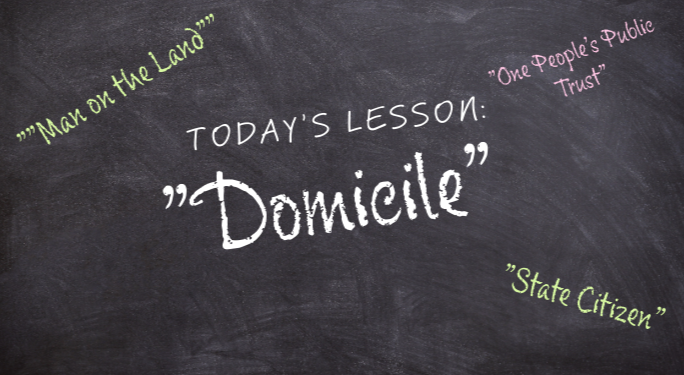
Sovereign citizens often latch onto the concept of “domicile” because it aligns with their belief that they’re not subject to the laws of the place where they physically reside. Here’s a breakdown of their misinterpretation:
- Misunderstanding Legal Definition: Domicile, in legal terms, refers to a person’s permanent home or the place they consider their principal residence [1, 2]. It’s relevant for taxation purposes or establishing jurisdiction in certain legal matters.
- Fabricated Legal Immunity: Sovereign citizens twist the concept of domicile to claim they can choose a different domicile (often a fabricated one) and thereby avoid legal obligations in their current location [2, 3]. This tactic has no legal basis.
- Challenge to Local Authority: By claiming a different domicile, they aim to reject the authority of local courts and governments where they reside [3].
- Disruption and Delay: Sovereign citizens might use arguments about domicile to try to confuse the court or delay legal proceedings [4].
Why Domicile Doesn’t Help Sovereign Citizens:
- Courts have clear guidelines for determining legal domicile, and simply claiming a different one won’t change that.
- Sovereign citizens’ attempts to use domicile to avoid legal obligations will likely fail.
Important Points to Remember:
- Domicile refers to a person’s established residence, not a magic shield against legal responsibility.
- Courts will determine domicile based on factors like physical presence and intent, not sovereign citizen claims.
- Ignoring legal obligations tied to your actual domicile can have serious consequences.
Additional Notes:
- Sovereign citizens might create elaborate narratives about their domicile being in some vague or fictional place. Courts are unlikely to entertain these fabrications.
Citations:
- [1] Cornell University Law School: Legal Information Institute: Domicile [“20 CFR § 725.231 – Domicile.” Legal Information Institute, Legal Information Institute, www.law.cornell.edu/cfr/text/20/725.231. ]
- [2] Anti-Defamation League: The Sovereign Citizen Movement [https://www.adl.org/resources/backgrounder/sovereign-citizen-movement-united-states]
- [3] Southern Poverty Law Center: Sovereign Citizens [www.splcenter.org/fighting-hate/extremist-files/ideolCenter,vereign-citizens-movement]
- [4] National Center for State Courts: Self-Represented Litigants [www.ncsc.org/information-and-resources/trending-topics/trending-topics-landing-pg/court-navigators-help-self-represented-litigan ]

