
|
Getting your Trinity Audio player ready...
|
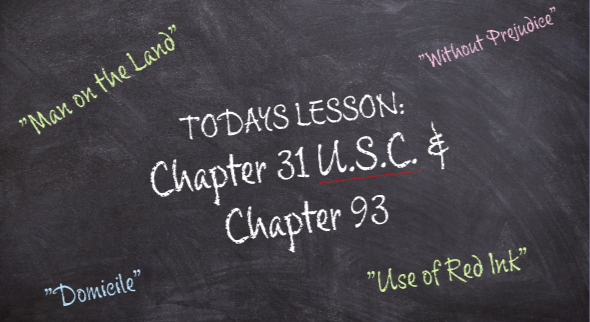
Sovereign citizens commonly misuse references to Chapter 31 and Chapter 93 of the U.S. Code, but these chapters don’t actually support their claims. Here’s how they misinterpret them:
Misunderstanding the Chapters:
- Chapter 31: Deals with the establishment of the Money Bureau and its various functions within the Department of the Treasury [1]. It has nothing to do with individual finances or debt cancellation.
- Chapter 93: Focuses on the definitions of various financial terms used by the federal government [2]. Sovereign citizens often misunderstand these definitions and try to manipulate them for their own purposes.
Misused Tactics:
- Fabricated Debt Elimination: Sovereign citizens believe referencing these chapters empowers them to file bogus legal documents to erase legitimate debts [3, 4]. These filings have no legal basis and can have negative consequences.
- Strawman Theory: This theory, often linked to Chapter 31 references, claims their legal name is a separate entity and not liable for debts. This theory holds no legal weight in courts.
- Pseudo-Legal Arguments: Sovereign citizens might use Chapter numbers as citations in nonsensical legal arguments, hoping to confuse judges or law enforcement [3]. Courts recognize these tactics and focus on the actual legal issues.
Important Points:
- Sovereign citizens often use complex-sounding legal references to make their arguments seem credible, but they misunderstand the actual content of these chapters.
- Chapter 31 and 93 don’t provide any legal loopholes to escape debts or obligations.
Citations:
- [1] Cornell University Law School: Legal Information Institute, Title 31 U.S.C. Money and Finance https://www.law.cornell.edu/uscode/text/31
- [2] Cornell University Law School: Legal Information Institute, Title 31 U.S.C. Money and Finance https://www.law.cornell.edu/uscode/text/31
- [3] Anti-Defamation League: The Sovereign Citizen Movement https://www.adl.org/resources/backgrounder/sovereign-citizen-movement-united-states
- [4] FBI Law Enforcement Bulletin:Sovereign Citizens: A Growing Domestic Threat to Law Enforcement https://leb.fbi.gov/articles/featured-articles/sovereign-citizens-a-growing-domestic-threat-to-law-enforcement


