
|
Getting your Trinity Audio player ready...
|
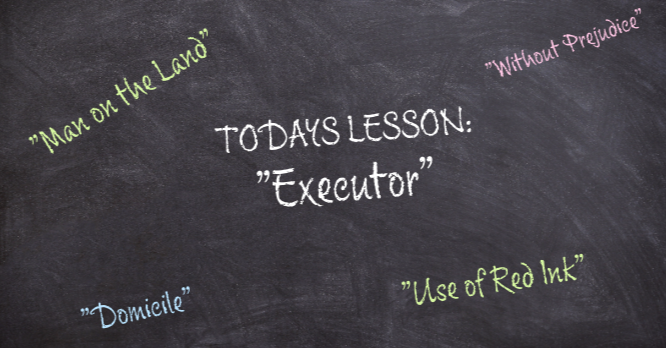
Sovereign citizens frequently misuse the term “executor” as part of their strategy to challenge legal authority and avoid obligations. Here’s my analysis of the real meaning and how sovereign citizens distort it:
Actual Definition of Executor:
- In the legal world, an executor is the person named in a will to handle the administration of the deceased’s estate. Their responsibilities include gathering assets, paying debts and taxes, and distributing remaining assets to beneficiaries.
Sovereign Citizen Misconception:
- Sovereign citizens twist the concept of an executor to claim they are not subject to laws or regulations because they act as the executor of their own “estate,” which they believe is a legal fiction representing their person.
- This can manifest in a few ways:
- Refusing to comply with laws: They might claim their “executor” status exempts them from things like traffic tickets or taxes.
- Disputing legal proceedings: They might argue that courts have no jurisdiction over them because they are acting as executors.
Why It’s Wrong:
- Misunderstanding of Estate Law: A true executor is someone appointed in a will to manage and distribute the assets of a deceased person’s estate [1]. Sovereign citizens often misunderstand this legal role.
- Strawman Theory and Fictional Debt: They believe they can act as the “executor” of a fictional entity they call their “strawman.” The strawman theory posits a separate legal identity (the strawman) burdened with debt, while the sovereign citizen is supposedly the true person free from obligations [2, 3]. This theory has no legal basis.
- Denial of Legal Name and Debt: By claiming to be the “Executor” of their strawman, sovereign citizens attempt to distance themselves from their legal name and deny any responsibility for debt incurred under that name [2].
- Pseudo-Legal Documents: Sovereign citizens might use the title “Executor” on nonsensical legal documents they create, hoping to challenge debt collection or legal proceedings [3]. Courts recognize these tactics and focus on the validity of the debt and the individual’s legal identity.
Important Points to Remember:
- Misusing “common law” doesn’t exempt someone from following laws or court orders.
- Courts will look at the relevant legal principles, including common law and statutory law, when making decisions.
- Sovereign citizen arguments based on a distorted understanding of common law hold no weight in court.
Citations:
- [1] Cornell University Law School: Legal Information Institute: Executors and Administrators [“Executors and Administrators.” Legal Information Institute, Legal Information Institute, www.law.cornell.edu/wex/executors.]
- [2] Anti-Defamation League: The Sovereign Citizen Movement [https://www.adl.org/resources/backgrounder/sovereign-citizen-movement-united-states ]
- [3] Southern Poverty Law Center: Sovereign Citizens [https://www.splcenter.org/fighting-hate/extremist-files/group/moorish-sovereign-citizens]
- [4] FBI Law Enforcement Bulletin: Sovereign Citizens: A Growing Domestic Threat to Law Enforcement https://leb.fbi.gov/articles/featured-articles/sovereign-citizens-a-growing-domestic-threat-to-law-enforcement


