
|
Getting your Trinity Audio player ready...
|
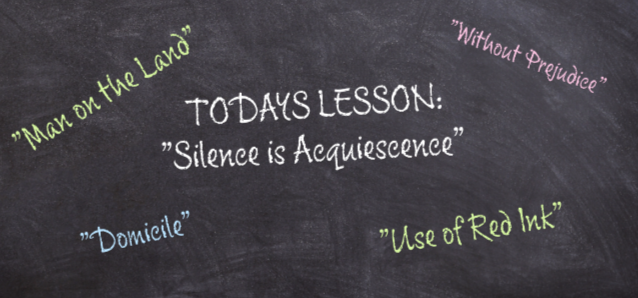
Sovereign citizens often reference the principle “silence is acquiescence” to justify their refusal to engage in legal proceedings or respond to lawful orders. Here’s how they misinterpret this concept:
Original Meaning:
- The concept of “silence is acquiescence” comes from Latin and translates to “silence is consent.” It suggests that if someone stays silent when they have the opportunity to speak up, it can be interpreted as agreement.
Misuse by Sovereign Citizens:
- Misunderstanding of Legal Procedure: The principle “silence is acquiescence” has a specific legal meaning in some contexts, but it doesn’t apply broadly to how citizens interact with the legal system [1, 2].
- False Waiver of Rights: Sovereign citizens believe their silence implies they consent to whatever legal action is being taken against them. This is a misconception [2, 3].
- Tactic to Avoid Participation: They might use “silence is acquiescence” as an excuse to avoid responding to lawsuits, subpoenas, or court appearances. Their goal is to derail the proceedings by not acknowledging them [3].
Why This Argument Fails in Court:
- Legal systems have established procedures for notification and response. Silence doesn’t necessarily equate to consent in most legal matters [1].
- Courts can move forward with cases even if a defendant remains silent. This protects the rights of the plaintiff and ensures the legal process continues [2].
The Importance of Due Process:
- Sovereign citizens have the right to remain silent, but they don’t have the right to obstruct the legal process entirely.
- Due process guarantees both sides a fair hearing, but it requires participation from the defendant to ensure their rights are protected.
Important Points to Remember:
- “Silence is acquiescence” is a limited legal principle and doesn’t excuse participation in legal proceedings.
- Sovereign citizens can’t use silence to avoid legal consequences.
- Consulting with an attorney is crucial when facing legal matters.
Citations:
- [1] Cornell University Law School: Legal Information Institute: Silence [“Estoppel by Silence.” Legal Information Institute, Legal Information Institute, www.law.cornell.edu/wex/estoppel_by_silence ]
- [2] American Bar Association: [What You Should Know About Your Rights in Court: https://www.americanbar.org/]
- [3] National Conference of State Legislatures: Model Sovereign Citizen Protection Act [ www.ncbi.nlm.nih.gov/pmc/articles/PMC7513757/]

