
|
Getting your Trinity Audio player ready...
|
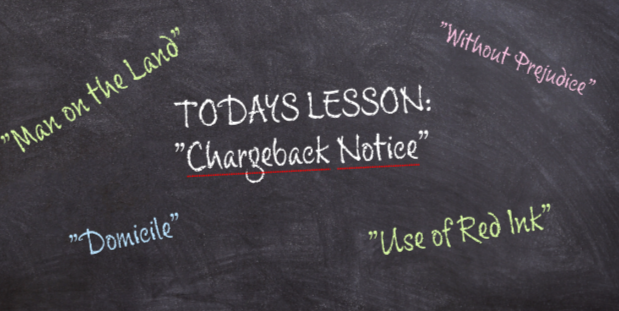
Sovereign citizens use “Chargeback Notice” as a document they believe challenges their financial obligations, often tied to the misconception that they are not subject to things like taxes or debt. Here’s a breakdown of their misuse of this concept:
- Misunderstanding of Financial Responsibility: Sovereign citizens believe a “Chargeback Notice” sent to creditors or the government magically negates their debts or financial liabilities [1, 2]. This concept has no basis in reality.
- Fabricated Legal Process: They might claim the “Chargeback Notice” initiates a process where the government or creditor must prove the debt is valid. This fabricated process doesn’t exist within the legal system [2].
- Challenge to Authority: The “Chargeback Notice” can be seen as a way for sovereign citizens to challenge the legitimacy of the creditor’s or government’s right to collect a debt [3].
- Stalling Tactic: Sending a “Chargeback Notice” might be a delaying tactic aimed at disrupting debt collection efforts or court proceedings [3].
Why “Chargeback Notice” Doesn’t Work:
- Creditors and the government have established legal procedures for collecting debts. A “Chargeback Notice” doesn’t override these procedures.
- Courts won’t recognize the “chargeback notice” as a valid legal defense against legitimate debts.
Important Points to Remember:
- The term “Chargeback Notice” is not a recognized legal document but rather a concept created by independent citizens.
- It doesn’t absolve someone of their financial obligations.
- Ignoring legitimate debts can have serious consequences.
Additional Notes:
- Sovereign citizens might also use the term “Affidavit of Payment” interchangeably with “Chargeback Notice.” Both stem from the same misunderstanding of financial responsibility.
Citations:
- [1] Anti-Defamation League: The Sovereign Citizen Movement [https://www.adl.org/resources/backgrounder/sovereign-citizen-movement-united-states]
- [2] Southern Poverty Law Center: Sovereign Citizens [www.splcenter.org/fighting-hate/extremist-files/ideology/sovereign-citizens-movement ]
- [3] National Conference of State Legislatures: Model Sovereign Citizen Protection Act “Model State Legislation.” NASAA, [www.nasaa.org/policy/legislative-policy/model-state-legislation/]

