
|
Getting your Trinity Audio player ready...
|
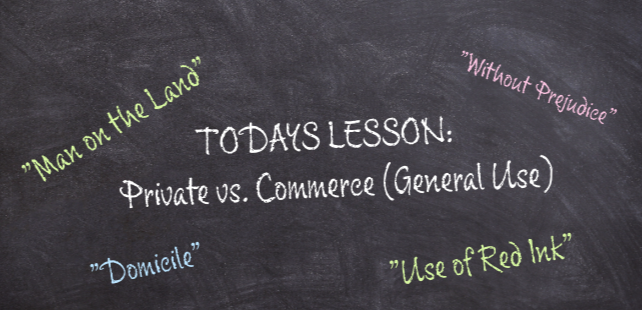
Sovereign citizens make a distinction between “private” and “commerce (general use)” based on a misconception about the nature of law and government. Here’s how they misunderstand this distinction:
- Misunderstanding of Legal Systems: Sovereign citizens believe there are two separate legal systems: one for “private” interactions and another for “commerce (general use)” [1, 2]. This fabricated system supposedly grants them immunity from laws applied in the “commerce” realm.
- Separate Codes for Different Activities: They might claim there’s a specific code governing “commerce (general use)” that doesn’t apply to them in their daily lives. This code doesn’t exist [2].
- Challenge to Government Authority: The “private vs. commerce” distinction can be seen as a way for sovereign citizens to reject the government’s authority over their actions, particularly in areas like driving or paying taxes [3].
- Misinterpretation of Legal Terms: Sovereign citizens might misuse legal terms like “commerce” to fit their narrative, ignoring the established legal definitions [4].
Why This Distinction Holds No Weight:
- There’s one legal system in the United States that applies to both private interactions and commercial activities.
- Sovereign citizens’ arguments based on this fabricated distinction are not recognized by courts.
Important Points to Remember:
- The “private vs. commerce (general use)” distinction is a sovereign citizen invention, not a legal concept.
- All citizens are subject to the same laws, regardless of whether their actions are private or commercial.
- The courts will look past attempts to use this distinction and focus on the legal issue at hand.
Possible Origins of the Distinction:
- Sovereign citizens might be misinterpreting concepts from areas like maritime law or the Uniform Commercial Code (UCC). These areas have specific rules, but they don’t create separate legal systems.
Citations:
- [1] Anti-Defamation League: The Sovereign Citizen Movement [https://www.adl.org/resources/backgrounder/sovereign-citizen-movement-united-states]
- [2] Southern Poverty Law Center: Sovereign Citizens [[www.splcenter.org/fighting-hate/extremist-files/ideology/sovereign-citizens-movement ]
- [3] National Conference of State Legislatures: Model Sovereign Citizen Protection Act [ww.ncbi.nlm.nih.gov/pmc/articles/PMC7513757]
- [4] Cornell University Law School: Legal Information Institute: Legal Dictionary [The Legal Information Institute of Cornell Law School, ecommons.cornell.edu/items/d13f0d8f-99bb-4f38-afcb-da0917d382f6. ]

