
|
Getting your Trinity Audio player ready...
|
I. EXECUTIVE SUMMARY

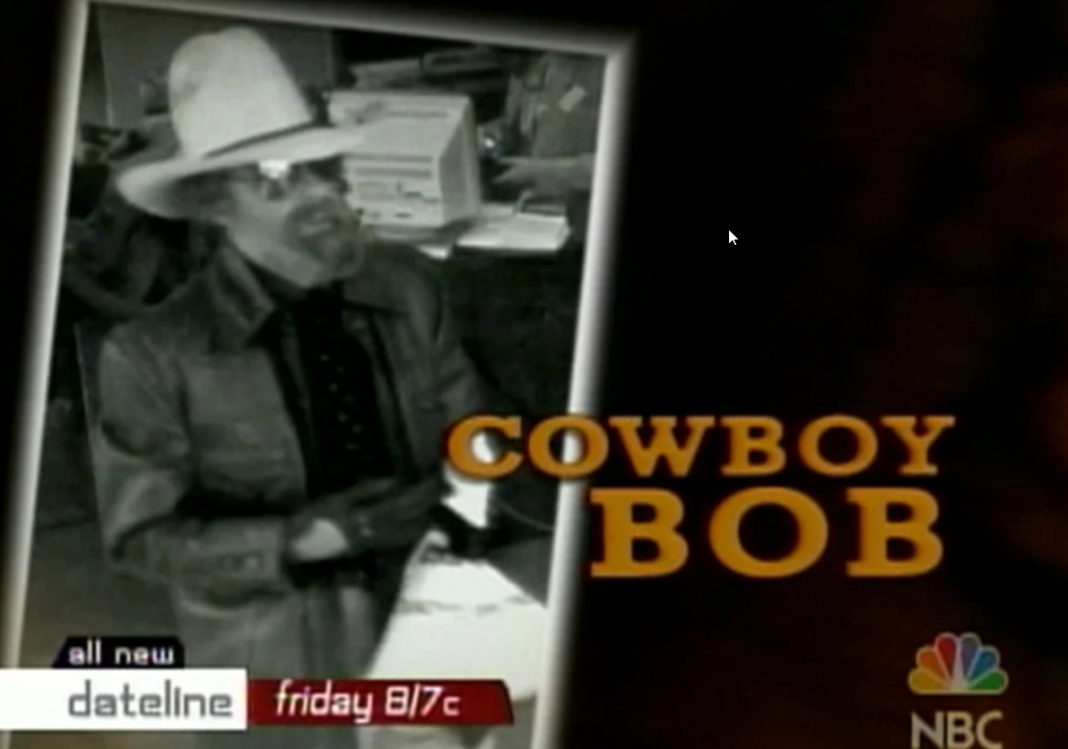
Peggy Jo Tallas (1944–2005) was a serial bank robber active primarily in the Dallas, Texas area during the early 1990s. She was dubbed “Cowboy Bob” by the media due to her distinctive and effective use of cross-dressing and Western attire as a disguise. Tallas successfully conducted a string of unarmed bank robberies, relying on written demands and minimizing confrontational behavior. Her criminal activity is divided into two distinct periods: a series of five robberies in 1991–1992, which led to her arrest and conviction, and a single final robbery in 2005, which resulted in her death via suicide by cop.
II. CASE BACKGROUND AND HISTORY
A. Initial Crime Wave (1991–1992)
- Period: May 1991 to September 1992.
- Scope: Five banks were robbed in Texas, including incidents in Irving, Dallas, Garland, and Mesquite.
- Resolution: Tallas was apprehended after using her personal license plate on a vehicle involved in one of the 1992 robberies, leading investigators to her residence. Physical evidence, including the disguise components and stolen cash, was recovered. She pleaded guilty and served a sentence of 33 months, noted as a relatively light sentence due to her never having used a weapon.
B. Final Incident (2005)
- Date: May 5, 2005.
- Location: Guaranty Bank in Tyler, Texas.
- Outcome: Tallas robbed the bank but the cash contained an exploding dye pack. She was tracked to her getaway vehicle (a motor home) and surrounded by law enforcement. Tallas reportedly told officers they would have to kill her. She was fatally shot after allegedly pointing a non-lethal (toy) pistol at officers.
III. MODUS OPERANDI (M.O.) ANALYSIS
The consistent use of a specific disguise and robbery method is the defining characteristic of P.J. Tallas’s M.O., which proved highly successful in concealing her identity for over a year.
| M.O. Element | Observation (1991–1992 Crime Wave) | Changes (2005 Incident) |
| Disguise | Cross-dressed as a man; wore a white ten-gallon cowboy hat, aviator sunglasses, men’s clothing (shirt, leather jacket, boots), and a fake beard. | Dressed in black and continued to use the cowboy motif. The fake beard/disguise was reportedly less emphasized in 2005. |
| Weapon Use | None. Tallas relied strictly on written demand notes to the teller. | Used a toy pistol in the final confrontation, which was presented to the officers. The note in the bank still demanded the money, but no weapon was displayed during the robbery itself. |
| Target Selection | Banks in the Dallas area (Irving, Mesquite, Garland). | Guaranty Bank in Tyler, Texas, indicating a potential shift in operational area post-incarceration. |
| Getaway Vehicle | Used her personal vehicle (a car) during the initial crime wave. | Used an RV/motor home during the final incident. |
| Interaction | Minimal. Kept head down, approached a single teller, and passed a note to demand cash (“No marked bills or dye packs”). Relied on speed and the distraction of the disguise. | Similar approach but failed to check for a dye pack, indicating a possible lapse in standard operational procedure (SOP). |
Key Tactical Takeaway: Tallas’s success stemmed from the high effectiveness of her disguise, which completely misled investigators into searching for a male suspect (“Cowboy Bob”). Her decision to commit “suicide by cop” in 2005 suggests a shift from pure financial motivation to a psychological motive in the final incident.
IV. CONCLUSION AND RECOMMENDATIONS
The case history of Peggy Jo Tallas highlights the critical importance of avoiding confirmation bias and considering all demographic possibilities in suspect profiling, particularly when a disguise is employed.
Recommendations for Current Cold Cases (if applicable to similar M.O.):
- Re-examine Disguise-Heavy Cases: Review all unsolved bank robberies or financial crimes involving cross-gender disguises for potential similar misidentification, irrespective of how the suspect was initially profiled.
- Focus on Trace Evidence: Analyze any preserved clothing or items related to the disguise for biological evidence (hair, skin cells, saliva) using modern FGG and sequencing techniques. Tallas’s use of a fake beard and mannequin head suggests materials that could hold trace DNA.
- Cross-Reference Vehicle Data: Ensure that vehicle records, including license plate numbers (even personal ones), are meticulously checked against the suspect database, as this proved the critical lead in the initial 1992 arrest.
- Psychological Profile Note: The motivation for Tallas’s final crime and subsequent confrontation indicates a potential pattern of desperation or acute psychological distress linked to her criminal acts, which may be relevant if analyzing suspects in other similar cases that culminate in self-destructive behavior.

