
|
Getting your Trinity Audio player ready...
|
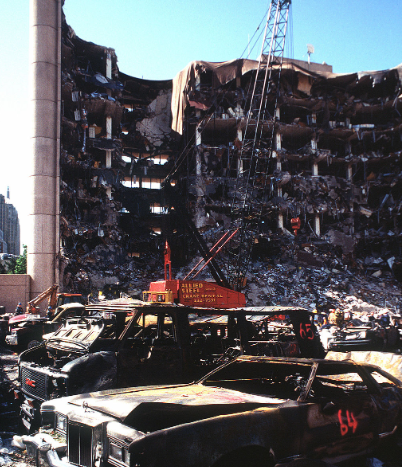
The Oklahoma City bombing on April 19, 1995, serves as a harsh reminder of the devastating impact of politically motivated violence. While the nature of terrorism has evolved significantly since then, the investigation and analysis of this horrific event offer invaluable lessons for modern crime analysts. By examining the investigative processes, the types of evidence, and the broader context of the bombing, today’s analysts can hone their skills and better prepare for the complex challenges of contemporary crime and terrorism.
The Importance of Interagency Cooperation and Information Sharing
The Oklahoma City bombing investigation, codenamed “OKBOMB,” was one of the largest and most complex in FBI history. It involved an unprecedented level of cooperation between local, state, and federal law enforcement agencies, as well as other organizations. This collaboration was crucial in rapidly identifying suspects, collecting and processing massive amounts of evidence, and ultimately bringing the perpetrators to justice.
Lesson for Modern Analysts: Today’s crime analysts must be adept at working in multi-agency environments. Terrorism and complex criminal enterprises often transcend jurisdictional boundaries, necessitating seamless information sharing and collaborative analysis. Analysts should be proficient in utilizing platforms and protocols that facilitate secure and efficient data exchange between different agencies. Furthermore, understanding the unique capabilities and resources of each partner agency can lead to more comprehensive and effective analytical outcomes.
The Power of Foundational Forensic Techniques in a Complex Investigation
Despite the scale and complexity of the bombing, traditional forensic techniques played a pivotal role in solving the case. The discovery of the Ryder truck’s rear axle with its Vehicle Identification Number (VIN) was a critical breakthrough, linking the vehicle to a rental agency in Kansas and ultimately to Timothy McVeigh. Fingerprint analysis further solidified the connection between McVeigh and the rental truck, as well as the materials used in the bomb. Handwriting analysis linked McVeigh to aliases used to procure bomb components.
Lesson for Modern Analysts: While digital forensics and advanced analytical tools are increasingly important, a strong understanding of foundational forensic principles remains essential. Crime analysts should be knowledgeable about the types of physical evidence, their potential significance, and the processes involved in their collection and analysis. This knowledge allows analysts to better contextualize forensic findings within the broader investigative picture and identify crucial links between suspects, victims, and crime scenes, even in technologically sophisticated crimes.
Understanding the Context: Beyond the Immediate Crime
The motivations behind the Oklahoma City bombing were rooted in anti-government extremism and a specific ideological context. Investigators delved into McVeigh’s background, his affiliations with militia groups, and his grievances related to events like the Waco siege. Understanding this ideological context was crucial in establishing motive and intent.
Lesson for Modern Analysts: Modern crime analysis must extend beyond the immediate facts of a crime to encompass the broader context. This includes understanding potential ideological influences, social networks, and historical events that might have contributed to the criminal behavior. For example, in cases involving hate crimes or domestic extremism, analyzing the suspect’s online activity, social connections, and expressed beliefs can provide critical insights into their motivations and potential future threats.
The Role of Open-Source Information and Public Tips
The public played an unexpected but significant role in the Oklahoma City bombing investigation. Hotel employees in Kansas provided crucial information that led to the identification of Timothy McVeigh. This case highlights the importance of public awareness and the potential for open-source information to contribute to even the most complex investigations.
Lesson for Modern Analysts: Modern analysts should be skilled in leveraging open-source intelligence (OSINT). This includes monitoring social media, news reports, and other publicly available information for potential leads and insights. Furthermore, establishing effective channels for receiving and analyzing public tips can be invaluable in generating new investigative pathways.
Adapting to Evolving Threats: From Truck Bombs to Cyberattacks
While the Oklahoma City bombing involved a large-scale physical attack, the landscape of terrorism and crime has evolved. Today, crime analysts must also contend with threats in the cyber domain, the spread of extremist ideologies online, and the use of sophisticated technologies by criminal organizations.
Lesson for Modern Analysts: The fundamental principles of thorough investigation, interagency cooperation, and contextual understanding remain relevant, but modern crime analysts must adapt their skills to address these evolving threats. This includes developing expertise in digital forensics, cybercrime analysis, social network analysis, and the identification of online radicalization. Staying ahead in a rapidly changing criminal landscape requires continuous learning and professional development.
Conclusion
The Oklahoma City bombing was a tragedy that left an indelible mark on American history. However, the lessons learned from the meticulous investigation and analysis of this event continue to hold relevance for modern crime analysts. By emphasizing interagency cooperation, the importance of foundational techniques alongside technological advancements, contextual understanding, the value of open-source information, and the need to adapt to evolving threats, today’s analysts can honor the memory of the victims by striving for greater effectiveness in preventing and solving complex crimes. The dedication and collaborative spirit exhibited during the OKBOMB investigation serve as a powerful example for all those working to decode crime and ensure public safety in the 21st century.

