
|
Getting your Trinity Audio player ready...
|
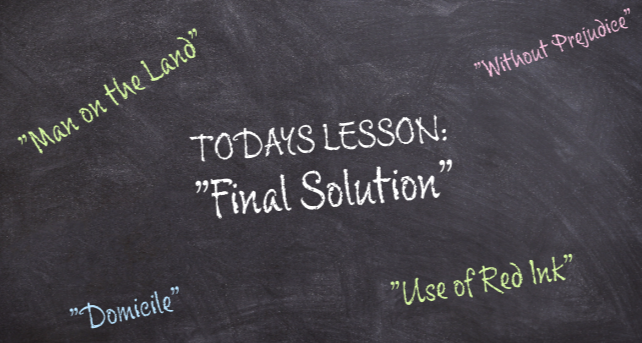
The phrase “Final Solution” is a highly sensitive term historically associated with the Nazi genocide during World War II. Sovereign citizens deliberately misuse this term in a particularly egregious way. Here’s why it’s offensive and inappropriate:
- Historical Weight of the Term: “Final Solution” is a term specifically associated with the Nazi genocide of Jews during World War II [1]. It’s a horrific event in human history, and using this phrase trivializes the suffering of millions.
- Inappropriate Comparison: Sovereign citizens often use “Final Solution” to describe their own legal battles with the government, claiming they’re being unfairly targeted [2]. This comparison is insensitive and disrespectful to the victims of the Holocaust.
- Inflammatory Rhetoric: Sovereign citizens might use this phrase to try to shock or provoke a reaction from law enforcement or the court system. It’s a deliberate attempt to use inflammatory language [2].
- Misunderstanding of Power Dynamics: Sovereign citizens often see themselves as victims of an oppressive government. However, their situation bears no resemblance to the systematic extermination of Jews by the Nazis [3].
The Harm of Misusing “Final Solution”:
- Disrespects Holocaust Victims: Using this term trivializes the Holocaust and minimizes the suffering of millions.
- Insensitive to Historical Context: It disregards the historical context of the phrase and the gravity of the event.
- Undermines Credibility: Sovereign citizens’ arguments lose legitimacy when they resort to such insensitive language.
Alternatives for Sovereign Citizens:
- Sovereign citizens can express their disagreements with the government using more appropriate language.
- Focusing on the specific legal issues at hand is a more constructive approach.
Important to Remember:
Misusing “Final Solution” is insensitive and does not strengthen a sovereign citizen’s legal case. It’s a term best left unused in this context.
Citations:
- [1] United States Holocaust Memorial Museum: Holocaust Encyclopedia – Definition of the Holocaust https://encyclopedia.ushmm.org/
- [2] Anti-Defamation League: The Sovereign Citizen Movement [https://www.adl.org/resources/backgrounder/sovereign-citizen-movement-united-states ]
- [3] Southern Poverty Law Center: Sovereign Citizens [https://www.splcenter.org/fighting-hate/extremist-files/group/moorish-sovereign-citizens]

